How to Downsize Your Home Successfully With Kids: A Practical Family Guide
Downsizing with kids is one of those decisions that feels enormous before you do it — and surprisingly manageable once you're through it. Whether you're moving into a tiny home, a smaller apartment, or simply trading square footage for a more intentional lifestyle, families are making this shift in growing numbers. And most of them will tell you: it was worth it.
This guide walks you through every stage of the process, from the first conversation with your children to the moment your new smaller space starts feeling like home.
Why More Families Are Choosing to Downsize
The tiny home family living movement has grown well beyond a fringe trend. Parents across the country are choosing smaller spaces not because they have to, but because they want to — and the reasons are practical, financial, and deeply personal.
Lower mortgage or rent costs free up money for experiences: travel, activities, savings. Less square footage means less time cleaning and maintaining, which translates directly into more time with your kids. And there's something quieter happening too — a cultural shift away from accumulating stuff and toward intentional living, where what you own reflects what you actually value.
Research from the U.S. Census Bureau shows average home sizes have grown dramatically over the past 50 years, yet family satisfaction hasn't kept pace. Many parents are starting to question whether more space actually delivers more happiness — or just more clutter.
For families with children, the benefits of a smaller home can be particularly striking. Kids in smaller spaces tend to spend more time in shared family areas rather than isolated in their rooms. That proximity builds connection. It also builds resilience, creativity, and the ability to share — skills that serve children far beyond childhood.
Start With the Conversation: Preparing Your Kids for the Move
The single most important thing you can do before downsizing is talk to your children honestly — and early. Kids who feel blindsided by a move are far more likely to resist it; kids who are included in the process often surprise you with their flexibility.
The approach varies by age. With toddlers and preschoolers, keep it simple and concrete: "We're moving to a new home. It'll be smaller, but cozy, and your favorite things are coming with us." Focus on continuity — their stuffed animals, their bedtime routine, their people.
School-age children need more. They'll have real concerns about friends, school, their bedroom, and their stuff. Acknowledge those concerns directly rather than dismissing them. Ask questions: What matters most to you about where we live? Their answers will guide your planning and show them they have a voice in this transition.
Teenagers are the trickiest audience. They value autonomy and privacy, both of which a smaller home can feel like it threatens. The key is to be honest about the reasons for the move, involve them in decisions about their space, and give them ownership over what they keep. A teenager who chooses their own storage solutions and helps design their corner of a shared room is far less resentful than one who had it done for them.
One thing to avoid across all ages: overselling. Don't promise the new place will be "so much better" before they've seen it. Instead, frame it as an adventure you're going on together — with real unknowns and real excitement.
How to Declutter Your Children's Belongings Without the Meltdowns
Decluttering children's belongings works best when kids are active participants, not passive observers of decisions being made about their things. The moment a child sees a parent holding their toy and asking "do you really need this?" the defenses go up. The approach matters as much as the outcome.
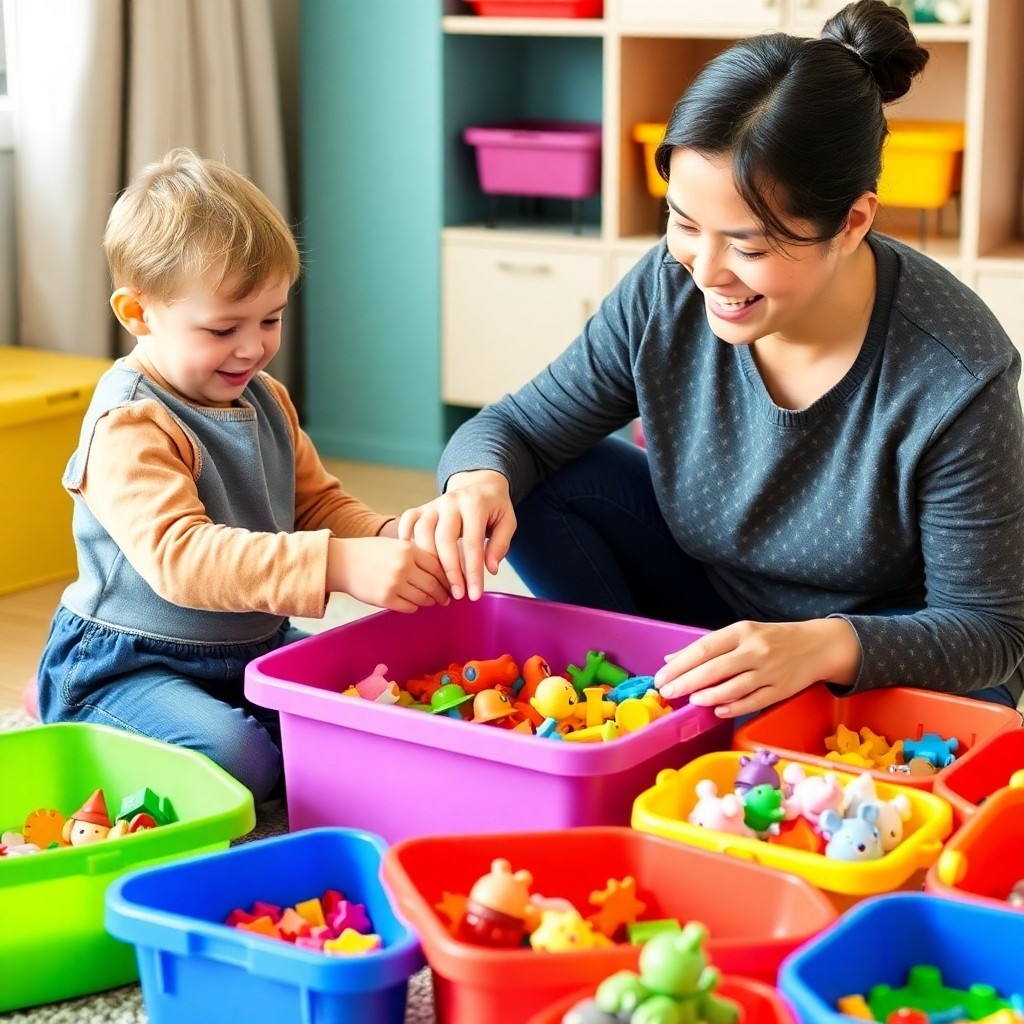
Start with a simple sorting framework your child can understand. Three categories work well for most ages: Keep, Donate, and Let Go. Avoid the word "throw away" — children (and many adults) find it easier to release things when they know those items are going somewhere useful.
For younger kids, make it tactile and playful. Let them put items in boxes themselves. Celebrate the donate pile as a gift to another child who needs it. Some families create a small ceremony around this — a "goodbye" moment that honors the object before releasing it.
For school-age children, try the "Top 10" method: ask them to choose their 10 favorite toys, books, or items in a category. Everything else is up for discussion. This gives them control while naturally narrowing the field. You can negotiate from there.
Keepsakes are a separate challenge. Not everything needs to be kept in physical form. Photographing artwork, special projects, or sentimental items before letting them go is a genuine solution — not a consolation prize. Many families create a digital memory book as part of the downsizing process, which kids often find more engaging than a box in a closet they never open.
One honest warning: some sessions will end in tears. That's okay. Forcing a child to give up something they're not ready to release creates more resistance than it resolves. Pick your battles. The goal is a collaborative family decluttering process, not a perfect purge.
Designing a Small Space That Actually Works for a Family
A small home can function beautifully for a family — but it requires intentional space planning, not just good intentions. The difference between a cramped small home and a functional one usually comes down to furniture choices and zone design.
Multi-functional furniture is the cornerstone of small-space family living. Beds with built-in drawers eliminate the need for a separate dresser. A fold-down wall desk creates a homework station that disappears when not in use. A storage ottoman does triple duty as seating, a footrest, and a toy chest. Every piece of furniture should earn its place by serving at least two purposes.
Shared rooms are often unavoidable when downsizing with kids. The key to making them work is dedicated zones within the shared space — even if those zones are defined by a bookshelf divider, a different rug, or simply an understanding about which side belongs to whom. Children need a sense of ownership over some territory, however small.
Storage solutions for small spaces should go vertical. Wall-mounted shelving, over-door organizers, and ceiling-height cabinets reclaim space that most families leave unused. In children's rooms specifically, accessible low storage for frequently used items and higher storage for seasonal or less-used things creates order without constant adult intervention.
Think about flow, too. In a smaller home, a cluttered hallway or a poorly placed piece of furniture creates friction every single day. Walk through the space and ask: where do shoes land? Where does homework happen? Where do kids decompress after school? Design around the real rhythms of your family, not an idealized version of them.
What to Keep, What to Let Go: A Family Decluttering Framework
A clear decision-making framework prevents the paralysis that hits most families mid-sort. The goal isn't minimalism for its own sake — it's keeping what genuinely serves your family's life in the new space.
Run every item through three questions:
- Do we use it regularly? (Within the last 6 months for most items; within the last year for seasonal things)
- Does it have genuine sentimental value that can't be captured another way?
- Does it have a specific place in the new home?
If an item fails all three, it goes. If it passes even one, it's worth a second look. This framework works for adult belongings and children's items alike, though kids need you to walk through it with them rather than apply it on their behalf.
For the household as a whole, tackle one category at a time rather than one room at a time. All books together, all linens together, all kitchen items together. This gives you a true picture of how much you actually own in each category — which is usually more than anyone expects.
Set a realistic timeline. Most families underestimate how long the family decluttering process takes. Six to eight weeks of regular sessions (not one frantic weekend) produces better results and less conflict. Build in rest days. Decluttering is emotionally exhausting, especially for children.
Helping Kids Adjust and Thrive in a Smaller Home
Kids' emotional adjustment to a smaller home is real and shouldn't be rushed. Most children need two to four months before a new space genuinely feels like home — and that timeline is normal, not a sign that something went wrong.
The fastest path to adjustment is routine. Keep mealtimes, bedtimes, and family rituals as consistent as possible in the new space. Familiar rhythms signal safety to children, especially when the physical environment has changed significantly.
Involve kids in making the new space their own. Let them choose their bedding, arrange their books, decide where their artwork goes. These small acts of ownership accelerate the sense of belonging. A child who has decorated their corner of a shared room has already started to claim it as home.
Watch for signs of genuine struggle — persistent sleep disruption, withdrawal, or anxiety that doesn't ease after a few weeks. These warrant a real conversation, and possibly support from a school counselor or family therapist. Most kids adapt well, but some need more help, and recognizing that early matters.
The Unexpected Upsides of Raising Kids in a Smaller Space
Parents who've made the shift to small-space family living consistently report benefits they didn't anticipate. Closer family bonds top the list. When everyone shares common spaces, you simply spend more time together — not by scheduling it, but by default.

Children raised in smaller homes often develop stronger creative play skills. With fewer toys and less space, kids learn to use what they have more inventively. They negotiate, they collaborate, they get bored and figure out what to do about it — all of which builds exactly the kind of adaptability that serves them well in school and beyond.
There's also a quieter benefit: less stuff stress. Families with fewer possessions spend less time managing, cleaning, and organizing. That recovered time goes somewhere — and in most families, it goes toward each other.
The minimalist family lifestyle isn't about deprivation. It's about clarity. When you've been through the process of deciding what actually matters and letting go of the rest, the things that remain carry more meaning. That's a lesson children absorb by living it — and it's one of the most valuable things a smaller home can teach them.
Frequently Asked Questions
Can kids really be happy living in a tiny or small home?
Yes — and many thrive. Children's happiness in a home depends far more on family connection, routine, and feeling safe than on square footage. Tiny home families consistently report that the closeness of small-space living strengthens relationships rather than straining them.
How do I handle it if my child refuses to give up their belongings?
Don't force it in the moment. Acknowledge their attachment, give them time, and revisit the conversation. For items they truly can't release, consider a temporary "maybe box" that gets stored for 30 days — often the emotional charge fades and they're ready to let go without a fight.
What's the best age to downsize with children?
There's no universally ideal age, but younger children (under 5) tend to adapt fastest because their world is centered on people rather than places. School-age children adjust well when included in the process. Teenagers require the most communication and autonomy but can become genuine allies in the transition when treated as such.
How do we manage homework and quiet time in a small shared space?
Designated times work better than designated rooms. Establish a household "quiet hours" window for homework and reading. Use noise-canceling headphones for older kids who need focus. A fold-down desk or a specific spot at the kitchen table can function as a consistent homework zone even in a very small home.
How long does it take for kids to adjust to a smaller home?
Most children settle into a new smaller space within two to four months. The adjustment is faster when routines stay consistent, kids have some ownership over their space, and parents model a positive attitude toward the change. If significant anxiety persists beyond three months, it's worth seeking outside support.