Minimalist Toys and Activities for Small Spaces
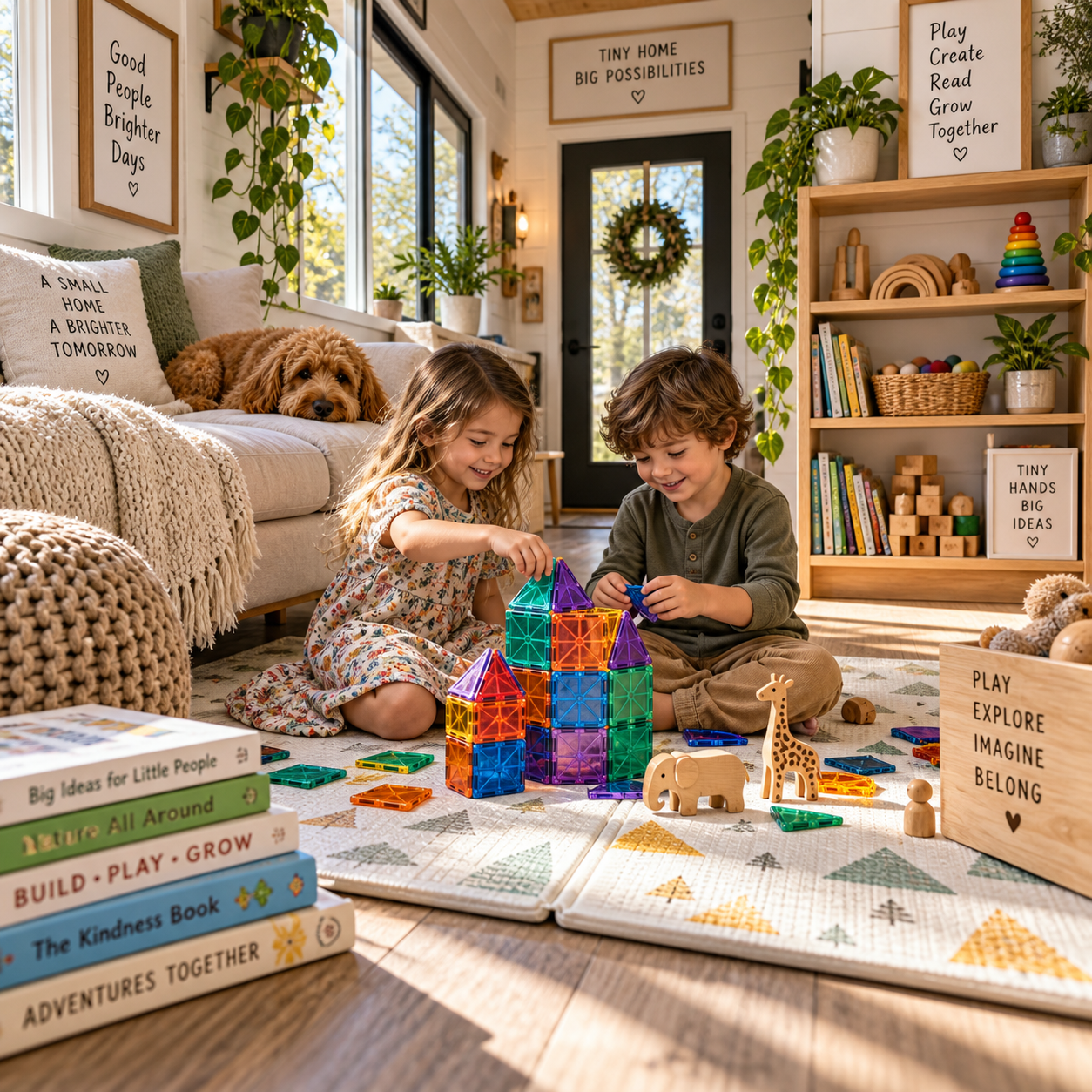
Small homes can support rich, satisfying play without becoming crowded with plastic bins and bulky playsets. The most useful minimalist toys and activities for small spaces are compact, adaptable, easy to store, and flexible enough to support independent play, imaginative play, movement, and family time.
The goal is not to limit children to a tiny collection. It is to make each item earn its space while keeping materials visible, accessible, and simple to reset. A thoughtful combination of open-ended toys, low-clutter activities, vertical storage, and toy rotation can turn a shared living area into a flexible play environment.
What Makes a Toy Suitable for a Small Space?
A toy suits a small space when it stores compactly, supports several kinds of play, lasts through repeated use, and can be cleaned up quickly. The best choices work in a shared room without creating constant noise, tripping hazards, or complicated setup.
Use the space-value test before bringing home a new toy. Ask four questions:
- Can it support more than one activity or age level?
- Does it fit in an existing basket, drawer, shelf, or under-bed container?
- Can a child use it safely without extensive adult setup?
- Will cleanup take less than five minutes?
Versatility matters because a single set of building blocks can become a garage, bridge, shop, puppet stage, or sorting game. Durability matters for the same reason: a toy used in many ways receives more wear than a single-purpose object.
Noise also deserves attention in a tiny home. Wooden puzzles, books, magnetic tiles, drawing materials, and pretend-play props usually create less disruption than electronic toys with constant sound. Quiet does not mean passive. A child can build an elaborate city or act out a story without filling every room with music.
Safety remains part of the decision. Store small pieces away from children who still mouth objects, secure tall shelves to the wall, and choose foldable play equipment with stable hinges and clear operating space. Choosing compact storage for convenience means accepting that adults may need to supervise access to certain pieces.
Best Minimalist Toys for Tiny Home Families
The best minimalist toys for tiny home families are open-ended building materials, a small pretend-play kit, books, puzzles, compact vehicles, and creative supplies. Choose a few high-use categories rather than large collections of nearly identical items.
Building and construction toys
Magnetic tiles or building blocks provide substantial play value in a relatively small container. Children can build towers, houses, roads, patterns, and imaginary machines. Blocks also support shared play because toddlers can stack large pieces while older children design more complex structures.
Keep one shallow bin for construction pieces instead of separating every color or shape. Sorting may look tidy, but a simple system makes it more likely that children will start and finish play independently.
Pretend-play essentials
A full play kitchen or costume wardrobe can overwhelm a small home. A compact pretend-play collection works better: a few fabric scarves, cardboard food containers, wooden utensils, small figures, and a reusable bag. These objects can become a restaurant, doctor kit, market, campsite, or travel office.
Fabric props fold flat, and ordinary household items can join the play when safe. A small basket of carefully selected props often creates more possibilities than a large single-purpose set.
Puzzles, books, and compact vehicles
Choose puzzles with sturdy storage trays, board books for younger children, and a limited shelf of favorite picture books and early readers. Rotate titles so the collection feels fresh without expanding. Small cars, animals, or trains can support storytelling on a rug, beneath a table, or on a strip of painter's tape used as a temporary road.
Creative supplies
Art and craft supplies can remain manageable when you use a portable caddy containing paper, washable crayons, colored pencils, glue sticks, child-safe scissors, and a few recycled materials. Avoid keeping every craft item available at once. A weekly tray with three or four choices reduces decision fatigue and makes cleanup faster.
Low-Clutter Activities for Children
Low-clutter activities keep children engaged by using imagination, movement, conversation, or materials already found at home. Most require only a clear patch of floor, paper, tape, or a handful of reusable objects.
Storytelling and drawing
Invite a child to choose three objects and invent a story connecting them. A wooden spoon, toy animal, and scarf might become a traveler, a dragon, and a magic river. Write down the story or draw three scenes afterward. This combines imaginative play, language, and art without adding new equipment.
Indoor obstacle courses
Use cushions, painter's tape, a folded blanket, and two sturdy chairs to create a short route. Children can crawl under a table, step along a taped line, carry a soft toy, and finish with five jumps. Set clear boundaries, remove fragile objects, and pack everything away immediately after the game.
Scavenger hunts and building challenges
Give children a list such as “find something round, something soft, something blue, and something smaller than your hand.” For a building challenge, ask them to make a bridge for a toy car using blocks, cardboard, or books. Change the question rather than buying another kit.
Music and movement games
Try freeze dance, rhythm copying, animal walks, or a quiet “follow the leader” routine. For shared rooms, offer two versions: energetic movement during an agreed time and slow-motion movement when another family member is working or resting.
These activities work because they have a defined beginning and end. A two-minute cleanup song, a return basket, or a photo showing where materials belong helps children participate in restoring the room.
How to Choose Toys for Different Ages and Siblings
To choose toys for different ages and siblings, select shared materials with varied difficulty and create separate rules for access, supervision, and turn-taking. The same object can serve different purposes as children grow.
Toddlers
Toddlers benefit from large blocks, chunky puzzles, board books, stacking cups, washable art materials used with an adult, and simple sensory play. Sensory play can involve a bowl of water and cups, dry oats with scoops, or play dough when developmentally appropriate. Keep small pieces inaccessible and supervise water, food-like materials, and loose objects closely.
Preschoolers
Preschoolers can use magnetic tiles, dress-up fabrics, matching games, drawing tools, simple construction challenges, and pretend-play figures. Offer two or three choices rather than an entire shelf. This supports independent play while keeping the shared room visually calm.
Older children
Older children may enjoy strategy games, chapter books, model-building materials, journaling, detailed drawing, coding puzzles, or designing a floor plan for the home. Store advanced materials in a labeled container so younger siblings cannot accidentally access small parts.
For siblings, focus on parallel play before expecting constant cooperation. One child might build a block structure while another creates a paper sign for it. Shared projects should include roles, such as designer, builder, storyteller, or collector, so participation does not depend on being the fastest or oldest.
Toy Storage and Rotation in a Tiny Home
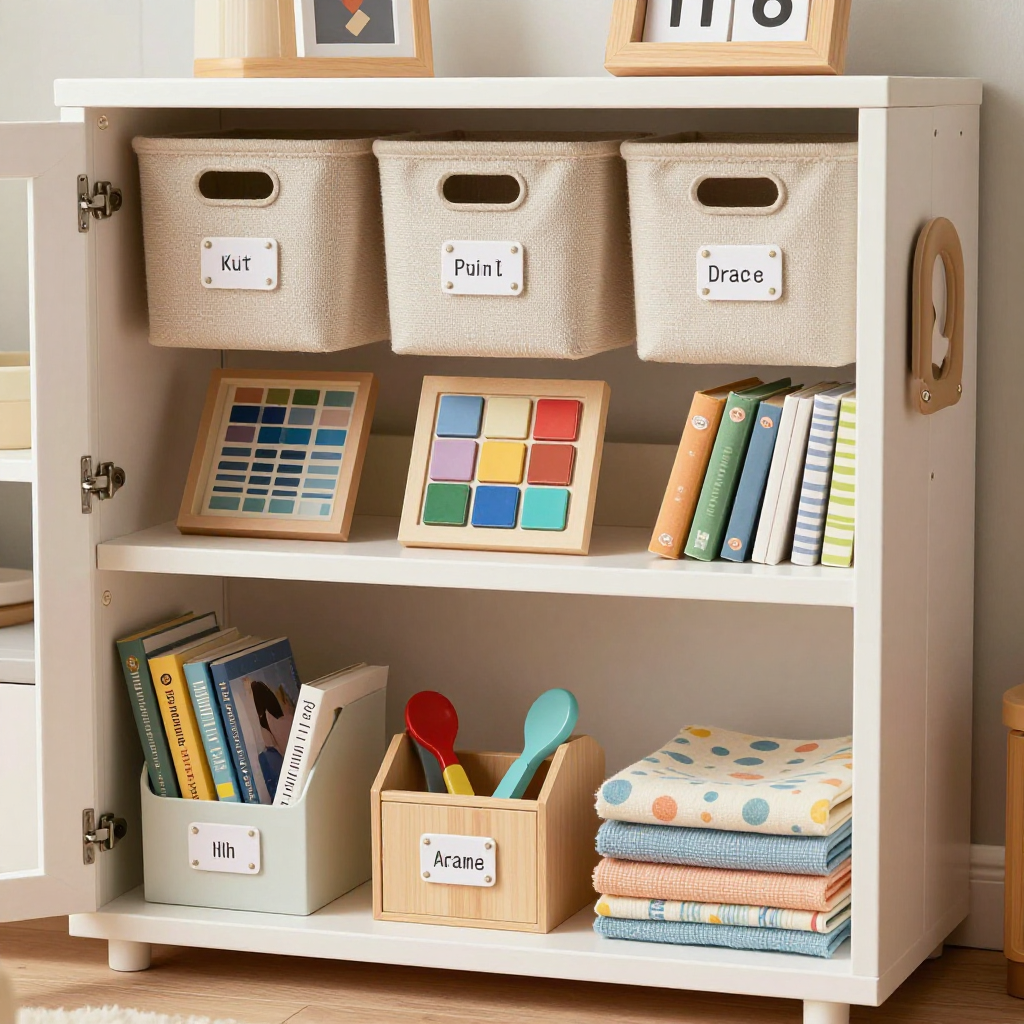
Toy storage in a tiny home works best when every category has a visible, reachable home and only a portion of the collection is available at once. Use labeled bins, vertical storage, under-bed drawers, and a simple toy rotation schedule.
Start with accessible storage. Low shelves allow children to see choices and return items without climbing. Use vertical storage for books, dress-up hooks, clipboards, or narrow baskets, but anchor furniture securely and avoid placing heavy objects overhead.
Under-bed storage is useful for reserve toys, seasonal materials, and foldable play equipment. Choose shallow containers that slide out easily; deep boxes often become difficult to search and eventually turn into forgotten clutter. A portable basket can hold the current art and craft supplies, making it easy to move activity from the table to a cupboard.
Toy rotation does not need a strict calendar. Keep a small active selection, then replace two or three items when interest drops. A practical rotation might include:
- One building category
- One pretend-play category
- Books and puzzles
- Creative materials
- One movement option
Invite children to help choose what returns to storage. Remove broken items, duplicates, and toys that consistently create conflict or require more space than the family can spare. Minimalism should improve daily life, not become a test of parental discipline.
Creating Flexible Play Zones
Flexible play zones use existing areas for temporary play and return them to their everyday purpose quickly. A foldable mat, portable basket, clear floor boundary, and multi-use furniture can define a play area without requiring a dedicated playroom.
A dining table can serve as an art studio, puzzle station, or building surface. A bench with storage can hold blocks, while a sofa becomes a reading corner when paired with a basket of books. Multi-use furniture earns its place when it supports family routines even when no one is playing.
Foldable play equipment, such as a soft climbing wedge, collapsible tunnel, or folding balance beam, can provide movement without remaining on the floor all day. Check weight limits, inspect hinges, and store equipment immediately after use. Compact does not automatically mean safe.
Use a small rug or foldable surface as a visual boundary. Children learn that toys stay on the mat and materials return to the basket when the mat is folded. This simple cue helps separate setup from cleanup, especially in a shared bedroom or living room.
For families with limited floor space, plan a daily rhythm: active play before lunch, table activities during quiet time, and a five-minute reset before dinner. The schedule matters less than giving each activity a predictable place in the household routine.
A Simple Minimalist Toy Strategy
A simple minimalist toy strategy is to assess, edit, organize, rotate, and review the collection every few months. This keeps toys useful without demanding a perfectly empty home.
- Assess use. Notice what children choose repeatedly, what supports shared play, and what remains untouched.
- Edit duplicates. Keep enough pieces for meaningful construction, but remove surplus items that add sorting and cleanup without adding play value.
- Organize by activity. Store blocks, art supplies, puzzles, books, and pretend-play props in clearly marked homes.
- Rotate thoughtfully. Hold back some materials and reintroduce them when interest or developmental readiness changes.
- Review with children. Repair, donate, recycle, or discard items together when appropriate, while keeping sentimental objects separate from everyday toys.
A balanced tiny-home collection might include open-ended construction, imaginative props, quiet books and puzzles, creative supplies, sensory materials, and one foldable movement option. The exact number depends on the children, layout, budget, and storage available.
Minimalist Toys and Activities FAQ
How many toys does a child need in a tiny home?
There is no universal number. Start with a manageable active selection that fits on one shelf or in a few baskets, then adjust according to age, interests, sibling needs, and how often the family can reset the space.
What are the best quiet toys for small spaces?
Books, puzzles, drawing materials, magnetic tiles, building blocks, matching games, felt boards, and small pretend-play figures are reliable quiet choices. Avoid judging a toy only by its size; a tiny electronic toy can create more disruption than a larger box of wooden blocks.
How can I store toys without taking over the living area?
Use low accessible shelves for daily toys, vertical storage for lightweight items, under-bed containers for rotation stock, and portable baskets for activities. Label by category and keep storage shallow enough that children can see and return the contents.
Which activities keep children busy with almost no supplies?
Storytelling, scavenger hunts, drawing with one sheet of paper, indoor obstacle courses, movement games, sorting household objects, and building challenges require little equipment. Their value comes from the prompt or challenge, not from having more materials.