Tiny Home Kitchen Hacks for Busy Parents: Save Space and Simplify Daily Meals
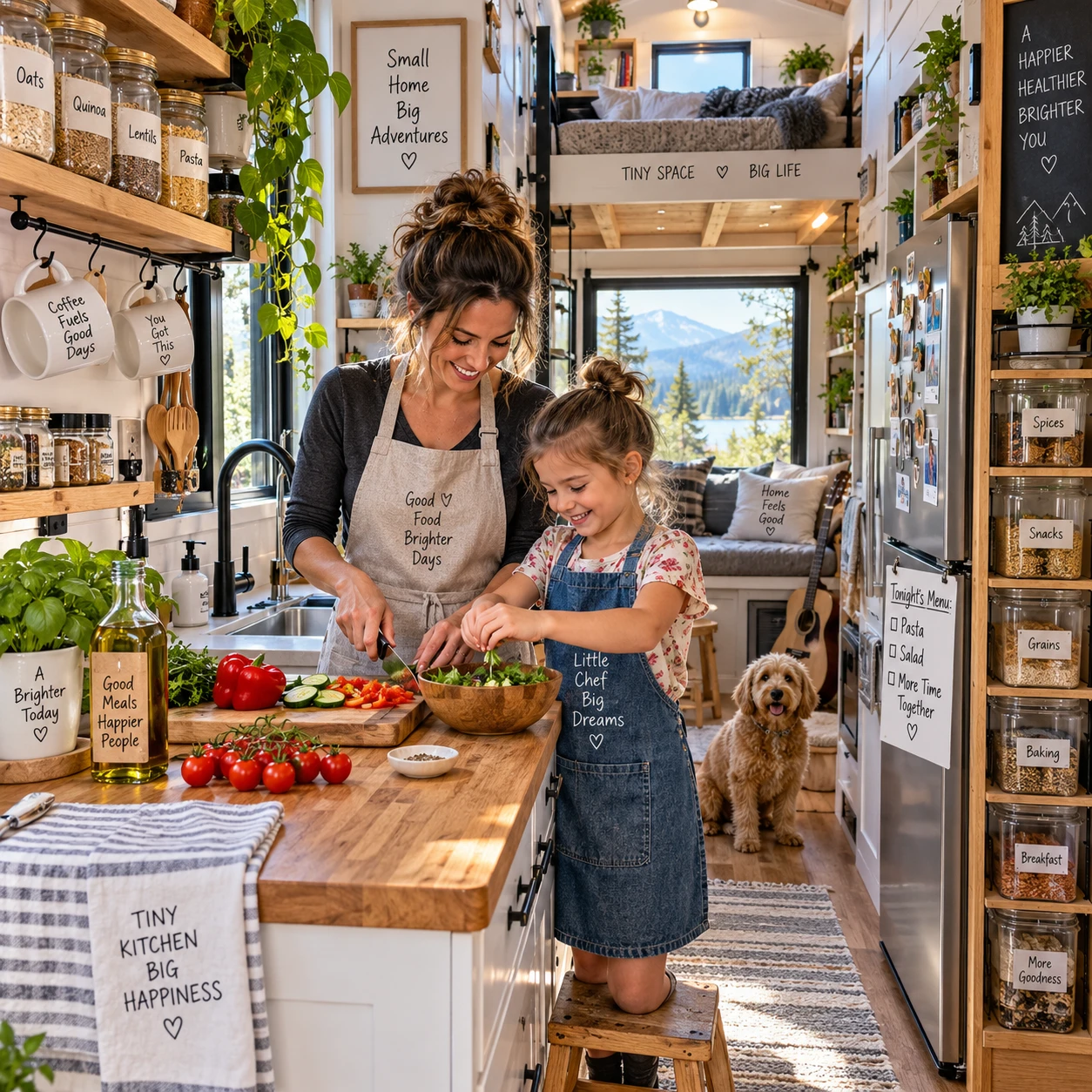
In a tiny home, the kitchen often has to serve as pantry, homework station, snack bar, and dinner prep zone, sometimes all at once. The goal is not to fit a full-size kitchen into a smaller footprint. It is to make everyday tasks easier with fewer steps, accessible essentials, and family routines that work even when the counter is crowded.
Start with a kitchen reset that fits family life
A tiny home kitchen reset starts by keeping the items your family uses regularly and removing the ones that occupy space without helping with daily meals. A short, practical inventory makes room for the tools, ingredients, and routines that matter.
Empty one cabinet or drawer at a time rather than pulling everything out at once. Sort each item into three groups: used most days, used sometimes, and rarely or never used. Keep daily essentials within easy reach; store occasional items higher up or elsewhere, and donate duplicates or unused gadgets. A second pancake pan may be handy once a year, but it takes up valuable space every day.
Think about your actual family menu. If you make oatmeal, sandwiches, and pasta most weeks, prioritize bowls, lunch containers, a saucepan, and the tools those meals need. Keep a modest buffer for guests or special occasions, but resist organizing around an imaginary version of family life.
- Daily: plates, cups, cutlery, lunch gear, and the cookware you reach for most.
- Weekly: baking equipment or a larger serving dish, stored out of the main work zone.
- Rarely used: duplicates and single-purpose tools that can be donated or stored outside the kitchen.
Try the reset for two weeks before buying organizers. That pause helps reveal what is genuinely missing and prevents spending money to neatly store things you do not need.
Make every cabinet, drawer, and wall work harder
Vertical storage, cabinet organizers, and a small number of wall-mounted solutions can make a tiny kitchen easier to use by bringing everyday items into view. The best setup keeps frequently used tools accessible without crowding the counter or blocking safe movement.
Use shelf risers to create a second level for mugs, bowls, or pantry cans. Drawer dividers keep cutlery and cooking tools from becoming a jumble, while a shallow bin can group lunch supplies or snack packs. Under-shelf baskets may add space for light items, but check that the shelf can support the added weight and that the basket does not interfere with cabinet doors.
Walls and cabinet interiors can hold items that otherwise occupy drawers. A short rail with hooks can keep a few frequently used utensils together, and a magnetic strip may work for suitable metal tools. Mount anything securely and away from hot burners, sharp edges at child height, and places where a child could pull it down.
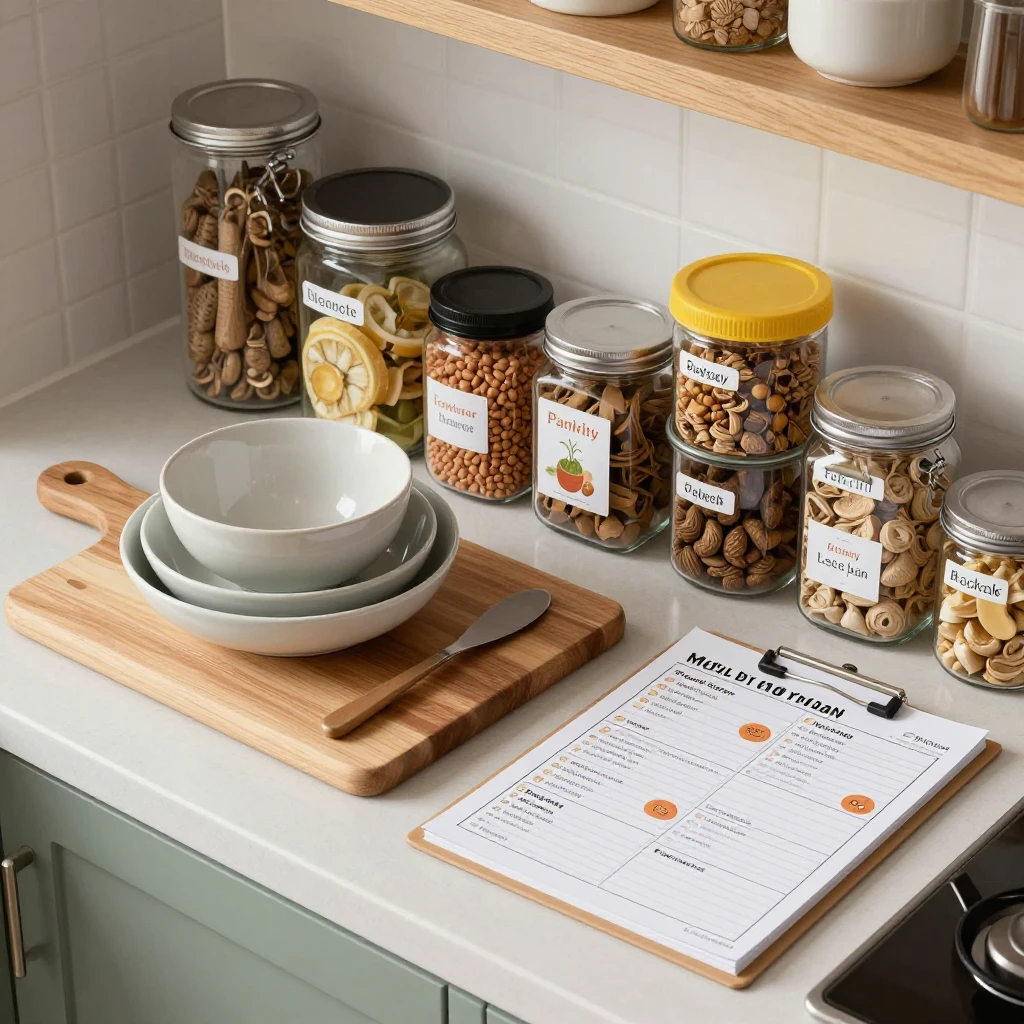
For pantry organization, group food by the way your family uses it: breakfast, school lunches, quick dinners, and baking. Clear containers can help you see what is running low, but original packaging works perfectly well if containers add cost or create another chore. Put heavier items low and keep food within reach only when children can access it safely.
A small counter often benefits more from a clear landing zone than from another organizer. Choose one spot for grocery bags or the next meal’s ingredients, then put everything else away after use.
Choose compact tools that do more than one job
Multifunctional cookware and appliances save space when they replace several tools your family would otherwise use. Choose pieces that suit meals you cook often, since a compact gadget is still clutter if it rarely leaves the cupboard.
A lidded saucepan can cook pasta, warm soup, and make oatmeal. A sturdy skillet handles eggs, vegetables, and simple one-pan dinners. Nesting bowls and measuring cups take less room than separate sets, while a cutting board that fits over the sink can add temporary prep space. Check that cookware works with your stove and can be cleaned without special products or extra steps.
Before buying an appliance, ask three questions: Will it replace another item? Will we use it at least weekly? Can we store it safely and reach it without unpacking half the kitchen? A small rice cooker may earn its place in a family that serves rice several times a week; it may not for a household that rarely makes it. There is no universal essential list.
Choosing one versatile tool over several specialized ones reduces storage needs, but it can also mean washing that tool more often or waiting to reuse it. If your family cooks multiple dishes at once, keep the few pieces that make that routine smoother.
Create a quick, repeatable meal-prep routine
A manageable meal-prep routine for a tiny kitchen uses a short plan, a clear work surface, and ingredients that can be reused across meals. Preparing a few components ahead can reduce weeknight decisions without turning a day off into a full cooking shift.
Once or twice a week, take ten minutes to check the calendar, look through the fridge and pantry, and choose three or four simple dinners. Reuse ingredients where it makes sense: roasted vegetables can go into a grain bowl one night and a wrap the next. Write a short shopping list based on what is missing, not on a collection of recipes that each require a new set of ingredients.
For each meal, use a compact sequence:
- Clear the counter and gather only the ingredients and tools needed.
- Wash or chop ingredients that can be prepared safely in advance.
- Cook components that take longest first, then use the waiting time to set the table or prepare a side.
- Put away ingredients as you finish with them and wash the cutting board between tasks when needed.
In a small workspace, prep ingredients in stages rather than laying everything out at once. A plate or mixing bowl can hold chopped vegetables until you need them. Keep raw meat separate from ready-to-eat foods, and refrigerate perishable ingredients promptly. If weekday schedules change often, rely on flexible building blocks such as cooked grains, eggs, beans, frozen vegetables, or leftovers instead of a rigid menu.
Set up a kid-friendly kitchen flow
A kid-friendly kitchen flow gives children small, age-appropriate jobs while keeping heat, knives, cleaning products, and breakable items out of their reach. Clear boundaries and predictable tasks help children participate without adding avoidable risks to a busy meal.
Set up a child-safe kitchen zone with items they can use independently, such as an unbreakable cup, a lunch container, or a snack that is appropriate for their age. Keep knives, glass, medicines, matches, and cleaning products secured. Children should stay away from the stove and hot cookware unless an adult is closely supervising a suitable task.
Match jobs to ability, not just age. A young child might rinse produce in a bowl or carry napkins to the table. An older child may measure ingredients, assemble a cold sandwich, or pack a lunch with supervision. Give one clear instruction at a time, and show where items go back when the task is done.
In a narrow kitchen, avoid having multiple people reach across the same work area. Agree on a simple traffic rule, such as one person working at the stove while another sets the table outside the cooking zone. This reduces collisions and helps children understand that hot surfaces are adult-managed spaces.
Make cleanup part of the routine
Quick cleanup works best when supplies are easy to reach and the family resets the kitchen in small steps during cooking and after meals. A brief, repeatable reset prevents dishes, crumbs, and lunch items from taking over the next meal’s workspace.
Keep a dish brush, cloth, and a small amount of dish soap near the sink, while storing cleaning products securely away from children. If counter space is tight, use a collapsible dish rack or dry dishes on a clean towel, then put them away once dry. Avoid letting wet dishes sit where they block the only prep surface.
Use a two-minute reset after meals: scrape plates, load or wash dishes, wipe the main work surface, and return pantry items to their homes. Assign age-appropriate jobs, such as carrying napkins or putting away clean, unbreakable items. The reset does not need to leave the kitchen spotless; it should make the room ready for the next family task.
A common trap is saving every dish for one large cleanup at the end of the day. That can turn a small sink into a bottleneck and leave no space for breakfast prep. Washing a pan while food simmers or clearing one place setting at a time spreads the work out, though it may not suit every meal or schedule. On especially busy nights, prioritize food safety and clear the sink enough to use it again; perfection can wait.
Frequently asked questions
How can I create more counter space in a tiny kitchen?
Clear the counter of items that can live in a cabinet or on a wall, and keep one landing area free for meal prep. A cutting board that fits over the sink can add temporary workspace, but move it before using the sink and keep it stable. A fold-down table or counter can provide extra prep or dining space if it can be installed securely and folded away without blocking a doorway. It helps only if the family has a clear place to store anything displaced from that surface.
What kitchen items are worth keeping in a tiny home?
Keep the cookware, dishes, and tools you use for regular meals, plus a small number of versatile pieces such as a saucepan, skillet, cutting board, sharp knife, and nesting bowls. The right list depends on your family’s menu and cooking habits. Before keeping a single-purpose item, consider how often you use it and whether another tool can do the same job.
How can kids help in a small kitchen safely?
Give children a defined task in a safe spot, such as washing produce, setting the table, or measuring a dry ingredient. Keep them away from hot burners, sharp knives, and cleaning products, and supervise tasks that involve tools or food preparation. In a narrow kitchen, have children step away from the cooking area when an adult carries hot food.
How can busy parents organize a tiny kitchen for meal prep?
Group pantry items by meal or use, keep everyday cookware close to the stove, and make a short plan based on the family calendar and food already on hand. Prep only a few ingredients or components ahead, and clear the counter before starting. A simple routine that can flex when plans change is easier to maintain than a detailed system that demands daily upkeep.