Tiny Home Parenting: How to Balance Privacy and Togetherness
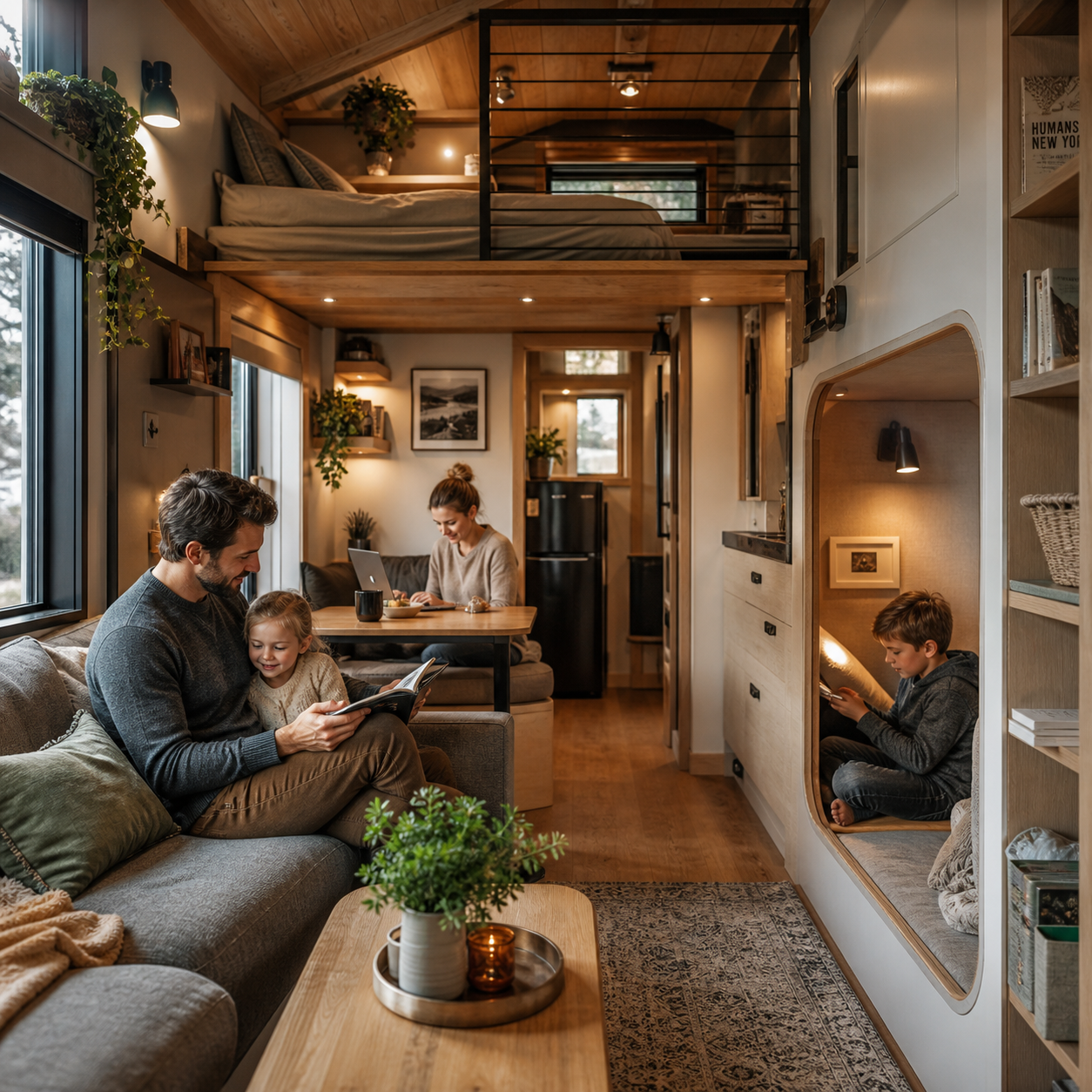
Tiny home parenting asks families to share more than square footage. Meals, schoolwork, play, rest, and difficult emotions may all happen within a few steps of one another. That closeness can create strong family bonds, but it can also make privacy, quiet, and personal boundaries harder to protect.
The goal is not to make a small home feel like a conventional house. It is to create a flexible rhythm in which family members can connect, withdraw, and reconnect without conflict. With clear agreements, thoughtful storage organization, and age-appropriate independence, tiny home family living can support both togetherness and personal space.
Why Privacy and Togetherness Matter in a Tiny Home
Privacy and togetherness both matter in a tiny home because children need connection and separation to develop confidence, emotional regulation, and trust. Limited space increases everyday contact, while personal boundaries prevent that contact from becoming overwhelming.
Shared spaces can make family life efficient. Parents notice when a child needs help, siblings can play together easily, and simple activities such as cooking or reading become communal experiences. Yet constant visibility does not automatically create closeness. A child may love family time and still need a closed curtain, a quiet corner, or a few uninterrupted minutes.
Privacy also changes with age and temperament. A preschooler may need a private place for calming down, while a teenager may need a more reliable boundary for changing clothes, messaging friends, or doing homework. Parents need personal time, too. Emotional boundaries are as important as physical separation.
Think of privacy in three layers:
- Physical privacy: a curtain, screen, loft, or separate outdoor area.
- Emotional privacy: permission to feel upset without immediate questioning or correction.
- Uninterrupted time: a protected period for sleep, study, reading, or quiet play.
A tiny home works better when all three are discussed openly rather than treated as luxuries.
Create Personal Space Without Adding Rooms
To create personal space in a tiny home, assign flexible zones that can be opened, closed, or repurposed throughout the day. Reversible solutions usually work better than expensive permanent renovations because family needs change quickly.
Use flexible room dividers
Ceiling-mounted curtains, folding screens, bookcases on locking casters, and fabric panels can separate a sleeping or study area without blocking light permanently. A curtain may provide enough privacy for changing clothes, while a folding screen can signal that someone needs quiet. Choose stable, child-safe equipment and keep exits, stairs, heaters, and windows accessible.
Privacy does not have to mean complete isolation. A half-height divider or open shelving can reduce visual interruption while preserving airflow and parental awareness. For younger children, that balance may feel safer than a fully enclosed space.
Design corners instead of rooms
Give each family member a recognizable personal zone. It might include a floor cushion, small shelf, clip-on reading light, basket, and headphones. The space can be only a few square feet, but its meaning matters. When the cushion is occupied or the curtain is closed, other family members know to ask before entering.
Loft arrangements can help separate sleep from daytime activity, although lofts require careful attention to age, fall protection, ventilation, and local safety requirements. A child who is not ready for a loft can use a curtained bed nook or a designated corner at floor level.
Use sound as a boundary
Noise-canceling headphones, soft earplugs for older children, rugs, felt pads, and quiet activity boxes can reduce sensory pressure. Headphones should never replace supervision for young children, and family members still need a visual signal for urgent communication. A simple card that says quiet time can work better than repeated reminders.

Set Clear Shared-Space Rules
To protect privacy in shared spaces, create a short set of rules that explains when people may enter, speak, borrow, move, or interrupt. Family rules should be specific enough to guide behavior but flexible enough to suit different ages and circumstances.
Hold a family meeting and ask each person what makes the home feel crowded or respectful. Write the final agreements where everyone can see them. Useful rules may include:
- Knock, announce yourself, or ask before opening a curtain or entering a personal zone.
- Closed curtains and screens mean pause unless there is an emergency.
- Changing clothes happens behind a designated divider or at an agreed time.
- Headphones indicate concentration, but adults remain available for urgent needs.
- Shared tables are cleared within a set time so another person can use them.
- Belongings stay in assigned bins, even when the home is busy.
- Devices use headphones during quiet hours, except for agreed family media time.
Keep quiet hours realistic. For example, a family might protect 7:30 to 8:15 p.m. for reading, drawing, or independent play rather than demanding silence all evening. Parents can model the rules by asking before moving a child’s project or interrupting a private conversation.
Rules also need an exception process. If a child is sick, frightened, or unsafe, privacy boundaries change temporarily. Explaining this distinction teaches consent and safety without making privacy feel conditional on perfect behavior.
Build Routines That Give Everyone Time Apart
To create breathing room in a tiny home, build predictable periods of separation into the family routine. Staggered schedules, solo activities, outdoor living areas, and one-on-one time reduce the pressure of constant togetherness.
Start with the busiest transitions. If everyone wakes, dresses, eats, and begins schoolwork at once, the home can feel chaotic even when it is organized. One parent might prepare breakfast while one child gets dressed behind a curtain and another takes a short walk with the other parent. Small timing changes can create more privacy without adding space.
A practical weekly rhythm might include:
- Daily solo time: 20 to 30 minutes for each person, adjusted for age.
- Outdoor decompression: a walk, porch activity, playground visit, or library trip after school.
- Parent reset time: a protected cup of coffee, shower, reading period, or quiet conversation.
- One-on-one time: a short individual activity between each parent and child during the week.
- Family anchor moments: shared meals, bedtime reading, or a weekly outing.
Nearby community spaces extend the home. A library study table, community center, park, or trusted relative’s home can provide quiet and movement. Outdoor living areas are especially useful because they offer separation while keeping supervision manageable. Weather, neighborhood safety, and accessibility will determine how much a family can rely on them.
Do not schedule every minute. Children also need unstructured time, and parents need routines that remain workable on tired days.
Use Storage and Organization to Reduce Tension
Storage organization reduces conflict in a tiny home by giving every person a reliable place for belongings and keeping shared surfaces available. The most useful system is easy to maintain, visible to children, and sized to the actual items the family uses.
Assign each family member one private container for personal possessions. A child might have a lidded under-bed box, a small wardrobe section, and a daily-use basket. Parents need equivalent protected storage; otherwise children may learn that adult belongings are private while theirs are always communal.
Use a three-level access system:
- Reachable: everyday clothes, books, school supplies, and comfort items.
- Shared: cooking equipment, games, art materials, and cleaning supplies used with permission.
- Protected: documents, medication, valuables, and private journals.
Rotate toys and clothing rather than keeping everything in circulation. A weekly five-minute reset can return items to their zones, while a seasonal review removes things that no longer fit a child’s age or interests. Avoid labeling a child’s possessions as clutter when the real problem is insufficient storage capacity.
One useful test is the evening reset: can each person put away the items used that day in under five minutes? If not, reduce categories, add a smaller number of open bins, or move rarely used items elsewhere. Choosing more storage for convenience may mean accepting less floor space, so prioritize items that support daily routines.
Design for Different Ages and Changing Needs
Age-appropriate independence in a tiny home requires privacy arrangements to evolve as children gain skills, awareness, and responsibility. A setup that works for a toddler may feel intrusive to a teenager, while a young child may need more supervision than a curtain can provide.
Young children
Use visible boundaries, predictable quiet spaces, and simple language such as your cozy corner or ask before coming in. Privacy may involve choosing where to calm down or deciding whether a parent may watch during play. Keep supervision, safe sleep, and access to adults central.
School-age children
Offer a personal bin, a homework station, and scheduled periods when siblings may not disturb one another. Children can help move a screen, prepare a quiet activity, and decide which belongings remain private. Teach them how to express a boundary respectfully: I am reading right now; I will play after the timer.
Teenagers
Older children usually need stronger control over changing, conversations, devices, and personal items. Agree on realistic closed-door or closed-curtain periods, device expectations, and safety exceptions. If the home cannot provide enough privacy, combine a home nook with regular access to a library, youth center, trusted friend’s home, or outdoor space.
Review arrangements every few months and after major changes such as a new school schedule, puberty, a sibling’s arrival, or a move. Privacy should increase with demonstrated responsibility, but it should never depend on a family having a large house.
Make Togetherness Intentional, Not Constant
Intentional togetherness means choosing meaningful shared activities while treating independent time as a normal part of family life. Families in tiny homes often feel closer when connection has a clear beginning and end instead of filling every unstructured moment.
Choose a few dependable rituals: breakfast together on weekends, a shared dinner, a short evening check-in, family board games, or reading aloud. Keep them simple enough to survive busy days. A ten-minute conversation in which everyone shares one good moment and one challenge may be more valuable than a complicated activity.
At the same time, avoid interpreting withdrawal as rejection. A child reading behind a curtain may be restoring energy, not refusing the family. A parent taking a walk may be preventing irritation, not abandoning responsibilities. Use neutral language around personal time so children learn that boundaries support relationships.
Common mistakes include treating every closed-off area as disrespectful, buying organizers before removing unused items, and creating rules without asking children what they need. Correct these by observing the actual pressure points for a week, testing one reversible change, and reviewing the result together.
Tiny home parenting works through adjustment rather than perfection. When family members can count on privacy, they usually return to shared life with more patience, attention, and willingness to connect.
Frequently Asked Questions
How can children get privacy in a tiny home?
Children can get privacy through curtains, folding screens, loft or bed nooks, personal storage, headphones, designated corners, and scheduled uninterrupted time. Match the solution to the child’s age, safety needs, and temperament.
What are the best temporary room-divider ideas for a tiny house?
The most practical temporary room-divider ideas include ceiling curtains, folding screens, open shelving, rolling bookcases, and fabric panels. Choose stable options that preserve ventilation and do not obstruct exits or stairs.
How do parents create quiet time in a small shared space?
Parents can create quiet time with staggered routines, family quiet hours, headphones, outdoor walks, library visits, and child-care swaps with trusted adults. Even 20 protected minutes can make a noticeable difference.
How can siblings share a tiny home more peacefully?
Give siblings assigned storage, separate activity zones, turn-taking rules, and permission to close a curtain or use a quiet corner. Schedule both cooperative play and independent time so sharing is not constant.
When should a child’s privacy arrangements change?
Review privacy arrangements as a child develops new skills, enters puberty, changes school schedules, expresses discomfort, or shows readiness for more responsibility. Reassess at least every few months rather than waiting for a major conflict.